Fajar/Fikri Bounce Back at Hong Kong Open After Two Straight Early Exits
Fajar Alfian and Muhammad Shohibul Fikri advanced to the second round of the Hong Kong Open 2026 after a three-game win over Chen Zhi Ray and Lin Yu.
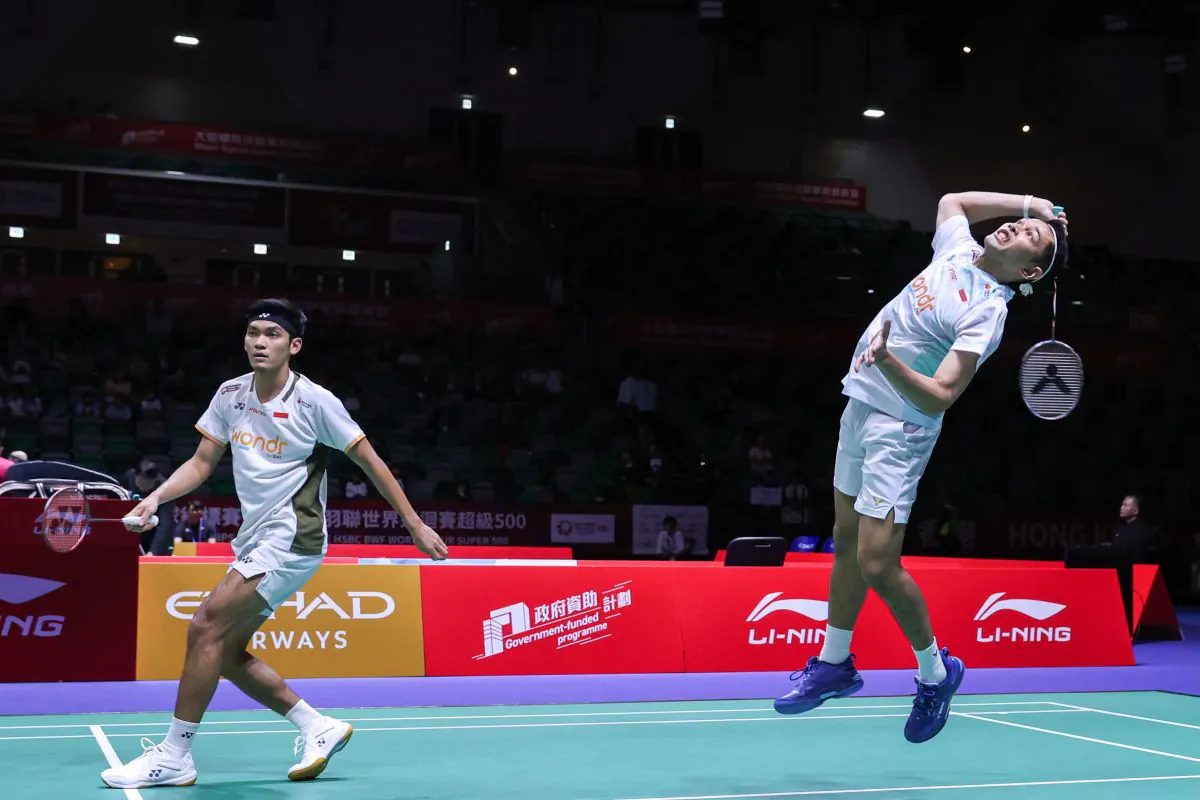
Indonesia's Fajar Alfian and Muhammad Shohibul Fikri advanced to the second round of the Hong Kong Open 2026 in Hong Kong on Tuesday, winning a three-game match and ending a run of two consecutive first-round exits.
According to Indonesia's ANTARA news agency, Fajar/Fikri beat Chinese Taipei's Chen Zhi Ray and Lin Yu 21-15, 21-23, 21-19. The top-seeded pair is targeting the quarter-finals to boost their chances of qualifying for the Badminton World Federation (BWF) World Tour Finals 2026. In the second round, they will face the winner of the match between Daniel Lundgaard/Mads Vestergaard and Choi Sol Gyu/Goh V Shem.
Fikri said they were still adjusting to the court and shuttlecock conditions, while Fajar had felt dizzy during the match. Both hope to improve physically and cut out mistakes in the next match.
Doubles challenges on the BWF Tour
The Hong Kong Open is part of the BWF World Tour, a circuit of international tournaments at various levels. Its Super 500 status places it among the stronger tournaments on the tour calendar. Results in each event affect rankings and points, although the exact value depends on the tournament category and how far a player or pair progresses.
In badminton, matches are best of three games. Each game goes to 21 points and a player or pair must win by two; if the score is tied near the end, the game continues until one side reaches 30. With rally scoring, every shot can produce a point, so unforced errors are just as important as the ability to score direct points.
In doubles, coordination and positioning are central. Pairs alternate between covering the front and back areas while reading the direction of the opponents' returns. A stalled attack can quickly turn to defence, and a pair that loses control of a rally can be forced to keep lifting the shuttle. Adapting to the pace of the shuttlecock and the characteristics of the court can therefore shape the length of rallies and the time available to build attacks.
Fajar/Fikri's scoreline showed how thin the margin was in the deciding game: they won by two points. A three-game match also adds physical and mental demands compared with a straight-games win. For a pair chasing a better outcome after early exits, staying focused until the final point is an important asset, not simply starting well.
The BWF World Tour Finals is different from a regular tournament. It is the season-ending event, bringing together top players and pairs based on the tour qualifying rankings, in accordance with BWF regulations. Reaching the quarter-finals in Hong Kong is therefore tied to collecting results across the season. One win does not guarantee a place, but it keeps their chances alive and gives them an opportunity to add further points.
What the result means for Indonesian fans
For badminton fans in Indonesia, the win is a reason to follow Fajar/Fikri into the next round, but it does not remove the need for consistent results. Two first-round defeats in a row showed that form in one tournament does not automatically carry over to the next. The Hong Kong result is also not enough to draw conclusions about their position in the World Tour Finals qualifying race, because the rankings are set by a series of tournaments and the results of rivals.
The next things to monitor are Fajar's condition after feeling dizzy, and the pair's ability to reduce errors against an opponent not yet known. Adapting to the court and shuttlecock is a match-day concern, not something with direct effects on prices, policy or people's jobs. For fans, the most useful information now is the second-round draw and the latest on the players' condition. The next match will give a clearer measure of whether this opening win can be followed by a more stable performance and a step closer to the quarter-finals.