Garudayaksa FC Holds Coaching Clinic to Build Character in Young Players
Garudayaksa FC held a coaching clinic with SSB Bogor United in Bogor Regency, focusing on football skills and character building for young players.
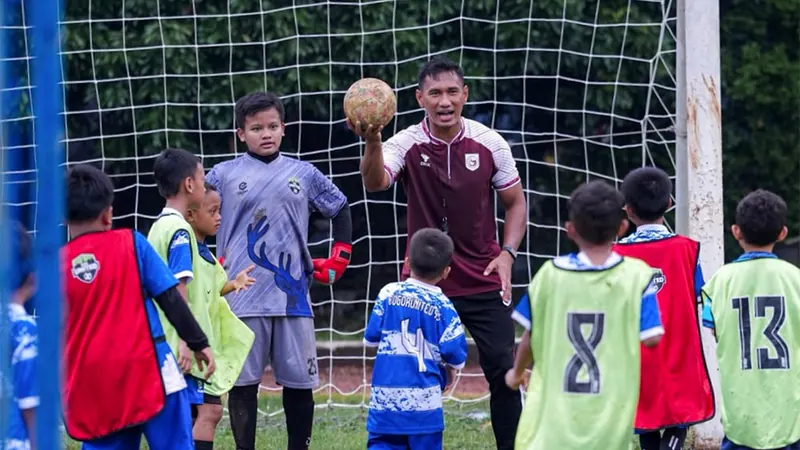
Garudayaksa FC held a coaching clinic with SSB Bogor United, a youth football school, at Elang Bondol Field in Bogor Regency on Saturday, 14 November. The session was aimed at early-age players.
According to a report from Liga Indonesia Baru (LIB), the operator of Indonesia's professional football leagues, the training session was led by Garudayaksa FC assistant coach Zulkifli Syukur, along with players Paulo Ricardo, Theo Numberi, and Tristan Ibrahim. The material covered not only playing technique but also discipline, respect, and personality development.
The Garudayaksa players accompanied the participants on the field. Tristan guided a dribbling drill, while Theo urged the children to stay consistent in their training. Asep Berlian, owner of SSB Bogor United and a Persis Solo player, welcomed the collaboration and hoped the joint development programme would continue.
Foundation of Early-Age Player Development
Early-age football is not simply a scaled-down version of adult training. At the start, development works best when adjusted to a child's abilities and stage of growth. The aim is to introduce the game, build basic skills, and make children feel safe and eager to keep training. Training load and pressure for results should not be the centre of the activity.
Skills such as dribbling, passing, receiving, and controlling the ball are the foundation of the game. Dribbling, for instance, means carrying the ball while moving and keeping control, not simply sprinting past an opponent. Obstacle exercises can help children work on their touch and change of direction. But those skills grow through repetition and playing time, not from a single session.
Development also involves decision-making. Players learn when to hold on to the ball, pass to a teammate, or move into space. For children, this process can be introduced through simple games and clear instructions. Coaches need to give room to try things, even when a choice does not work, so that training does not turn into blindly following orders.
Mental and social aspects go together with technical ability. Respecting teammates and opponents, listening to instructions, taking turns, and accepting the outcome of a game are all habits that can be built in a football environment. For that reason, talk of character in sport has practical meaning: those values have to show up in everyday behaviour on the pitch, not just in slogans.
Football schools are one place where children are first exposed to regular training and team play. The coach there is not only a teacher of movements, but also someone who keeps the learning atmosphere right, provides feedback, and makes sure activities fit the age group. Family support and chances to play also help children enjoy the process. Not every participant needs to become a professional; the benefits of sport can still come through fitness, teamwork, and confidence.
Real Benefits for Bogor Football
For the participants in Bogor, a session with players from a professional club offers a training experience outside the usual football-school routine. Direct contact allows children to see movements in practice and ask questions of people who play football for a living. The added value is not a promise that participants will turn professional, but an extra experience that can spark interest and give both children and coaches something to learn from.
Long-term benefits depend on continuity. One coaching clinic cannot replace regular training, coaching support, proper facilities, and an environment that supports children. If collaboration like this continues, the key is whether the material can be reused in football-school sessions and whether similar opportunities reach more children. Asep Berlian's hope for an ongoing programme remains a hope, not an announced schedule of activities.
For Indonesian readers, this story matters mainly as an example of community development, not as an event that directly changes the Super League race, ticket prices, or national football policy. The next thing to watch is the follow-up between the club and the football school, and the consistency of local training. Success can also be measured by a safe, fun, age-appropriate learning experience—not only by how many children eventually join professional clubs.