Barcelona’s Five Greatest Goalkeepers, From Valdés to ter Stegen
Barcelona has had standout goalkeepers across several eras. Valdés, Ramallets, Zubizarreta, ter Stegen and Sadurní made their mark through titles and individual records.
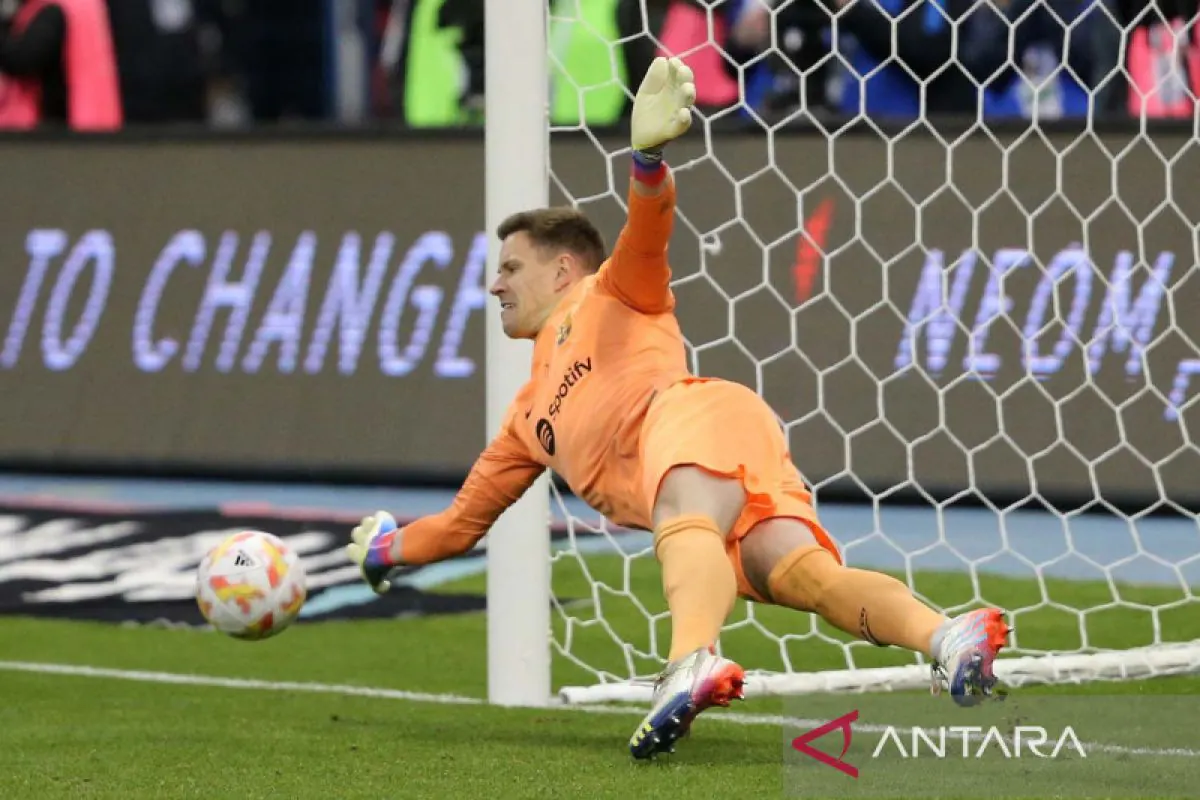
FC Barcelona has had five standout goalkeepers in its history, from Antoni Ramallets in the 1950s to Marc-André ter Stegen in the modern era, according to a review by ANTARA, Indonesia’s national news agency.
Víctor Valdés has one of the most complete records. He made 539 first-team appearances from 2002 to 2014, won five Zamora Trophies, six LaLiga titles and three Champions League titles. Valdés was also part of the team that won six trophies in 2009.
Ramallets, who played for Barcelona from 1948 to 1961, made 388 official appearances and won six league titles and five Copa del Rey trophies. Andoni Zubizarreta, meanwhile, made 410 appearances from 1986 to 1994 and helped the club win four LaLiga titles and one European Cup, now known as the Champions League.
Ter Stegen matched Zubizarreta’s appearance tally in 2024. The German goalkeeper also won the Zamora Trophy in the 2022/2023 season after conceding 18 goals in 38 LaLiga matches. The fifth name, Salvador Sadurní, made 334 appearances from 1961 to 1976 and won three Zamora Trophies.
How Goalkeeping Has Changed Across Eras
Comparing goalkeepers from different periods requires more than counting appearances or trophies. Barcelona has experienced major changes in football: how teams build attacks, the rules of the game, pitch conditions and the demands of the goalkeeper’s role have all evolved from one generation to the next. Statistics therefore need to be considered alongside the team and circumstances of each era.
Modern goalkeepers are generally expected to do more than stop shots. They can also provide an option for passes when their team has the ball, help launch attacks and make decisions under pressure from opponents. A goalkeeper who is composed on the ball gives defenders an additional passing option, although shot-stopping remains a fundamental measure of the role.
A clean sheet means a team finishes a match without conceding a goal. It is a useful measure of defensive results, but does not fully capture a goalkeeper’s performance. The number and quality of chances faced, the strength of the defence and the team’s style of play all affect whether the goal remains secure. The same is true of goals conceded: that figure reflects the work of the whole team, not the goalkeeper alone.
The Zamora Trophy offers another, more specific measure. It is awarded to the goalkeeper with the best goals-conceded average in LaLiga. However, this individual award still depends on team performances and the number of matches played. Valdés and Ramallets winning the award five times each points to sustained consistency, but does not by itself settle who was the greatest in every aspect of the game.
A list spanning different eras also shows that the club’s history was shaped by many generations, not just one period. Ramallets is associated with the early-1950s golden age, Zubizarreta was part of Johan Cruyff’s Dream Team, and Valdés and ter Stegen stood out in more recent eras. Sadurní bridged the generations. Differences in roles and playing conditions mean their records are best understood as accounts of individual contributions, rather than as a fully equal statistical contest.
What the List Means for Indonesian Fans
For readers and football fans in Indonesia, this list is chiefly a way to trace Barcelona’s history through its goalkeepers. The names connect different eras and help explain how a club can have more than one important figure in the same position. The list is not news about changes to prices, policy or employment in Indonesia, so its direct effect on everyday life is limited.
Fans who follow Barcelona can use appearance and title records as a starting point, then assess each goalkeeper’s role in the context of the era and the team’s playing style. When looking at match statistics, clean sheets and goals conceded should not be considered in isolation. Watching how a goalkeeper anticipates chances, communicates with defenders and contributes to the flow of play offers a fuller picture than any single figure.
Readers should also consider which criteria they use to decide who deserves to be called the best. By the measure of titles and awards, Valdés and Ramallets have strong records. If the focus is a particular period, Zubizarreta, Sadurní and ter Stegen each have a different story to tell. Other names, including Urruti, Claudio Bravo, Miguel Reina, Pedro Artola and Ricardo Zamora, also have historical contributions to their credit. This list of five is therefore best seen as an entry point to the history of Barcelona goalkeepers, not a definitive ranking that ends the debate.