Meet the Four Teams in Group K at the 2026 FIFA U-17 World Cup
Mexico, Romania, Cameroon and Venezuela bring different levels of experience and ambitions to Group K at the 2026 FIFA U-17 World Cup in Qatar.

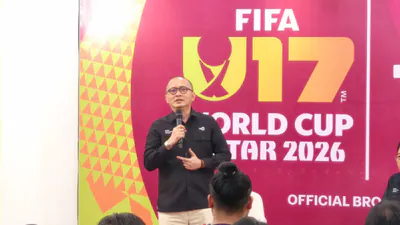
Mexico, Romania, Cameroon and Venezuela will compete in Group K at the 2026 FIFA U-17 World Cup in Qatar. According to TVRI News, the tournament was three days away when its report was published.
Mexico arrive with the strongest record of the four teams. They qualified as group winners in the Concacaf qualifying competition—the tournament for North America, Central America and the Caribbean—and have won the U-17 World Cup twice, in 2005 and 2011. Under coach Jurgen Castaneda, attention will be on Adan Sanchez, a Monterrey forward who scored five goals in qualifying.
Romania will make their tournament debut after qualifying as one of the best runners-up in UEFA U-17 EURO qualifying. Defender and captain Edu Valentin Corlat is a player to watch. Cameroon, who have not advanced beyond the group stage in their two previous appearances, qualified after reaching the quarter-finals of the Africa U-17 Cup of Nations, the competition run by the Confederation of African Football (CAF). Venezuela complete the group after finishing seventh in qualifying for the South American Football Confederation (CONMEBOL) U-17 tournament. Winger Andy Saavedra scored the winning goal against Bolivia.
A Test of Young Players’ Development
Youth tournaments such as the U-17 World Cup bring together players at the early stages of their professional careers. For many, international matches offer experience against opponents with different playing habits, pace and tactical approaches. Results matter, but individual development is also worth watching.
The group stage usually requires teams to collect points consistently across several matches. Under the standard football scoring system, a win is worth three points, a draw one point and a defeat none. Teams therefore need more than a strong performance in a single match: goal difference and the ability to protect results can also matter when teams are separated in the standings.
Players to watch are not always goal-scorers. Wingers can create space down the flanks and deliver the ball into dangerous areas. Central midfielders link defence and attack, set the tempo and direct the flow of play. Defenders who read situations well and can start attacks from the back can help their teams play out of pressure rather than simply clear the ball.
Assessing young players should involve more than one moment or statistic. Tournament performances are shaped by the opposition, tactics, playing time and support from teammates. Physical development during adolescence also varies from player to player. A player who stands out in one moment will not necessarily follow the same path once they reach senior football.
Competitions like this also give coaches a chance to see how players make decisions under pressure. Mistakes can be part of the learning process, while success in one match does not guarantee long-term success. A fuller assessment considers consistency, positional understanding, communication and adaptability.
What Indonesian Fans Can Watch For
For readers in Indonesia, the Group K contest has no direct impact on everyday prices, policy, jobs or services. Its main value is the chance to follow emerging international players and compare football approaches from different regions. Fans can watch how teams build attacks, handle pressure and manage a game when leading or trailing.
Indonesia’s appearance at the 2023 U-17 World Cup as hosts also keeps youth football competitions close to the attention of the country’s football fans. But a simple comparison of national results is not enough to assess the quality of player development. It is more useful to look at the process: playing opportunities for young players, training quality, technical coaching and the continuity of their progression to senior level. Fans can observe different approaches at this tournament without treating a single result as the sole measure of success.
In Group K, one thing to watch is how the players in the spotlight perform their roles against different opponents. A tournament performance can bring attention to new talent, but players’ futures will still depend on their development after the competition. As the report cited does not provide information about upcoming fixtures, readers should wait for official announcements for match times and viewing details.