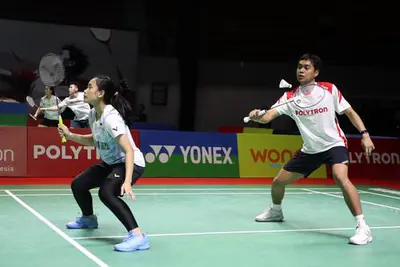
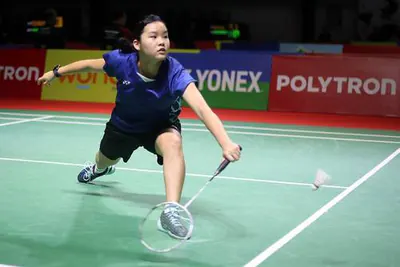
MilkLife Indonesia Junior International Series 2026 crowns champions from U-13 to U-19
The MilkLife Indonesia Junior International Series 2026 wrapped up in Kudus, with champions named in the U-13, U-15, U-17 and U-19 divisions. The tournament drew 1,016 shuttlers from eight countries across Asia, Europe and the Americas.
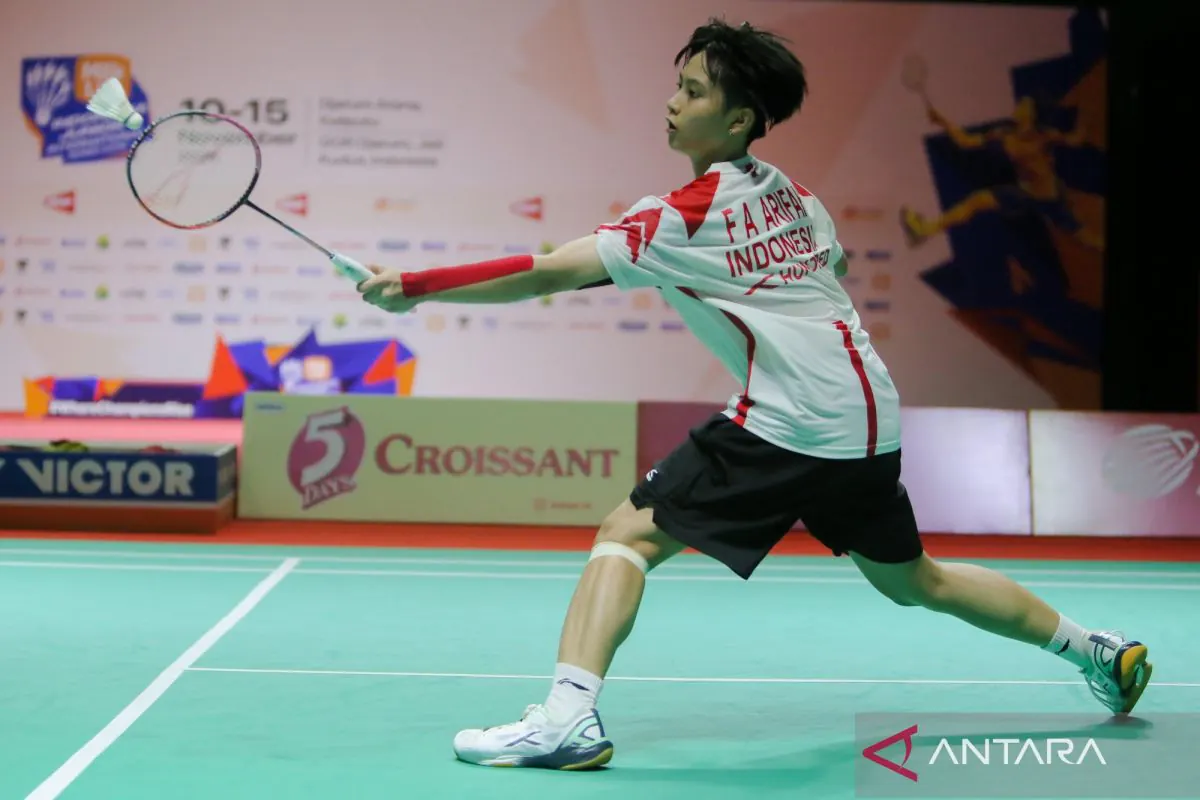
The MilkLife Indonesia Junior International Series 2026 wrapped up on Sunday at Djarum Arena in Kudus, Central Java, with titles decided in the U-13, U-15, U-17 and U-19 age groups.
According to the ANTARA news agency, the tournament featured 1,016 shuttlers from eight countries across Asia, Europe and the Americas. Organisers said they hope the next edition will attract even more participants.
In the U-13 division, the champions were Maura Wahyu Keisha Maharani, Feliks Zebua, Putri Marianasari/Bilqis Abigail Mokoginta, and Andra Julio Ghaizan/Ahmad Fauzan Ilmi.
In U-15, the winners were Nafla Berly Syakira Al Habsyi, Ghalib Ahnaf Dira, Alisha Artha Amara/Khanza Zulfanihayah, Muhammad Rasya Adhyazka/Xavier Razqa Ramadinata, and Xavier Razqa Ramadinata/Zhaafira Khoerunnisa.
In U-17, the champions were Kalia Rahmadani, Arven Naufal Renaldi, Syaikha Gendis Putri Setiawan/Hillary Lilyana Supit, Muhammad Waldan Habibi/Darmawan Setiawan, and Timothy Lionel Warokka/Bunga Kirana Larasati.
In U-19, the winners were Frisca Adelia Arifah, Yarits Al Kaaf Rengganingtyas, Atresia Naufa Candani/Aurelia Syakira Putri, Muhammad Rizki Mubarrok/Faizal Pangestu, and Raihan Daffa Edsel Pramono/Atresia Naufa Candani.
Competition pathway for young shuttlers
The U-13, U-15, U-17 and U-19 divisions mark distinct age groups. In sports development, such categories allow young athletes to compete against contemporaries rather than immediately facing senior players with different experience and physical strength. Age eligibility and entry requirements are set by tournament regulations, so an age-group label alone does not explain every condition for participation.
Singles and doubles events also test somewhat different skills. Singles players rely on court management, endurance and shot selection to control their side of the court. In doubles, communication between partners, court coverage and quick decision-making are essential. Mixed doubles adds the combination of a male and a female player in one pair, with coordination still key. A list of champions across the events therefore provides a broader picture than simply identifying who stood out in one category.
Junior tournaments can be a place for athletes to test their skills in a competitive setting. Winning a title is a record of achievement at one championship, but it does not automatically indicate success at senior level. Player development continues through training, competitive opportunities and sustained coaching. Factors such as consistency, physical readiness and the ability to adjust strategy also come into play as the level of opposition and match pressure rises. One tournament result, in that sense, is best read as a single stage in an athlete's journey.
The event's name includes the format “International Series”, but its “junior” status should be noted when readers compare it with competitions involving professional players. The two do not necessarily share the same participant groups, objectives or competition pathway. The championship involved support from several sporting bodies; ANTARA reported that the committee thanked the Indonesian Badminton Association (PBSI), Badminton Asia and the Badminton World Federation (BWF). The involvement of those organisations does not turn the results into a guarantee that every champion will move directly into the senior level.
What the tournament means for Indonesian badminton
For readers in Indonesia, hosting the event in Kudus placed the city as a meeting point for young athletes from various countries. The presence of international participants offered a chance to encounter diverse playing styles without treating one tournament as the sole benchmark for the progress of national badminton. Participant data from three continents shows the championship's reach, but it is not enough to infer economic effects on local residents, price changes, or a direct increase in the number of athletes.
The next thing to watch is the continuity of competition and development after the tournament ends. The organising committee expressed hope that future editions would attract more participants, while Akhmad Khafidz Basri Yusuf, chairman of the Central Java provincial board of PBSI, stressed the importance of preparing the next generation. For families and aspiring athletes, the results in Kudus can serve as a reference for recognising the young names who won titles, not as a definitive prediction of their careers. A more meaningful long-term measure is whether players receive consistent training and competition opportunities and can progress from one age group to the next.