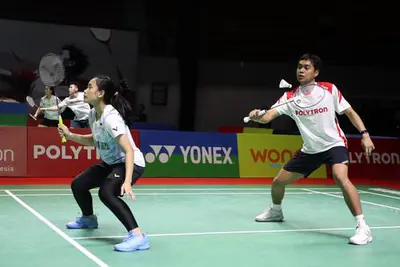
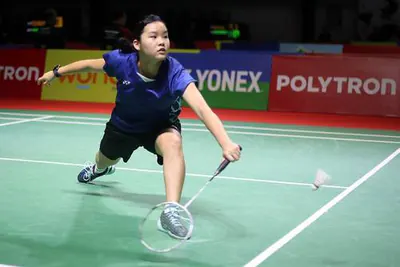
Salsabila Amiradana Opens Polytron Yogyakarta IC 2026 with Comeback Win
Salsabila Amiradana came from behind to beat fellow Indonesian Meiliana Anatsaya Effendi in the round of 64 of the Polytron Yogyakarta International Challenge 2026.
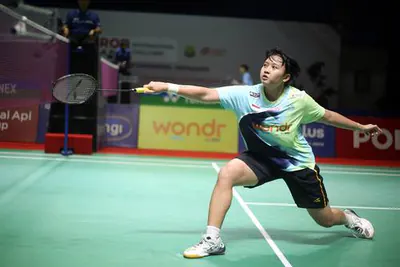
Indonesia's women's singles shuttler Salsabila Amiradana beat compatriot Meiliana Anatsaya Effendi in the round of 64 of the Polytron Yogyakarta International Challenge 2026 at the Amongrogo Sports Hall (GOR Amongrogo) in Yogyakarta on Tuesday, 17 November 2026. According to a report from Djarum Badminton, Salsabila recovered after losing the opening game and closed the match with a 19-21, 21-6, 21-4 scoreline.
Salsabila said she was overthinking and not enjoying her game at the start of the match. After dropping the first game, she quickly tried to shift her focus. The coach's instructions to stay confident and concentrate helped her change her approach in the next two games. In the round of 32, she will face Malaysia's Eng Ler Qi, and she has set a semifinal appearance as her short-term target.
Staying Focused in a Three-Game Match
The result of a badminton match is not determined only by the ability to hit the shuttle, but also by how a player adapts when the initial plan goes wrong. In singles, a player must cover a large area of the court alone. Accurate shot placement, energy management, and the ability to read an opponent's options can therefore become decisive factors over the course of the match.
Singles matches are usually played as the best of three games. Each game is played to 21 points using rally-point scoring, meaning the winner of a rally earns the point regardless of who served. A player must lead by two points to close out a game, with a maximum of 30 points. This system means a few quick errors can immediately change the score gap, but a player still has a chance to turn the match around in the next game.
Salsabila's scoreline showed a major shift from the opening game to the two that followed. The numbers alone do not explain the full course of play, but they do show three phases: a narrow lead for Meiliana, followed by Salsabila's dominance in the second and third games. In matches like this, a change in rhythm can come from something simple, such as cutting down unforced errors, returning the shuttle with more patience, or forcing the opponent to cover more ground.
The term International Challenge in the tournament's name indicates an event that brings together players from different countries. Cross-border competition gives athletes the chance to test themselves outside the domestic circuit. For singles players, every round is also a test of consistency: an early win does not guarantee a long run, because the next opponent may bring a different combination of speed, reach, and shot selection. Salsabila now needs to prepare for Eng Ler Qi without treating her first-round result as a reliable guide to the next match.
Opportunities and Notes for Fans
For Indonesian badminton fans, Salsabila's victory means one home representative has advanced to the next round, not a guarantee of a title. The knockout format makes every match decisive for an athlete's progress. Attention may therefore turn to the process itself: whether Salsabila can start her next match more calmly, maintain the quality of her shots during long rallies, and keep adjusting her tactics when her opponent takes the initiative.
The result has no visible direct impact on daily life or prices in Indonesia; the news is focused on the match outcome. Its practical value is mainly for spectators who follow the progress of athletes and tournaments. Information about the next round can help them track Salsabila's run, although the schedule for the match was not stated in the report. What remains to be seen is her performance against Eng Ler Qi and whether the semifinal target she set can be achieved. One win is an opening step, while each subsequent round brings new challenges and clearer measures of performance.