Three Indonesian Women's Singles Advance Past First Round in Yogyakarta
Mayla, Jolin, and Salsabila won their round-of-64 women's singles matches at the Polytron Yogyakarta IC 2026 and advanced to the next round.

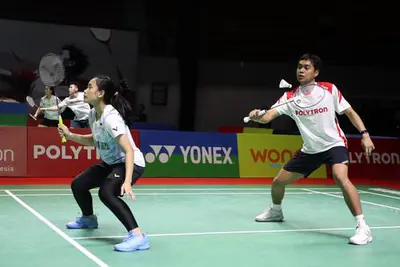
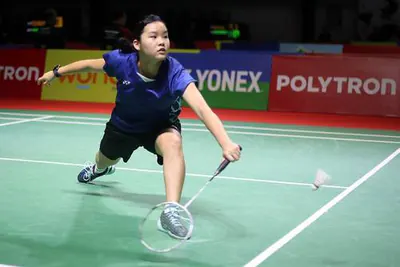
Three Indonesian women's singles players — Mayla Cahya Afilian Pratiwi, Jolin Angelia, and Salsabila Amiradana — cleared the round of 64 at the Polytron Yogyakarta IC 2026 in Yogyakarta on 17 November 2026.
Mayla defeated Koh Yee Xin of Singapore 21-14, 21-15; Jolin beat Sng Ying Shuen 21-10, 21-17; and Salsabila recovered from losing the first game 19-21 to win 21-6, 21-4 against Meiliana Anatsaya Effendi, as reported by the Badminton Association of Indonesia (PBSI).
Strong wind was a notable factor in the matches involving Mayla and Jolin. Mayla said her performance was not yet optimal because she still made many unforced errors, while Jolin chose to play more simply and safely as instructed by her coach.
Salsabila admitted she lost the first game because she was overthinking, but was able to refocus in the next two games. They now face different opponents: Dalila Aghnia Putri, Lim Zhi Shin, and Eng Ler Qi.
Wind and Focus Decide the Early Rounds
The round of 64 in a badminton tournament is normally a knockout stage. One lost match can end a player's run, so strategy in the opening match is often more about consistency than taking risks. In Mayla and Jolin's matches in Yogyakarta, the windy court conditions were a simple-looking factor that nonetheless changed the way they played.
In badminton, wind affects the speed and direction of the shuttlecock, especially in net play, lifts, and cross-court smashes. When the shuttle does not follow the expected path, players tend to make more errors — hitting too hard, misreading the shuttlecock's shadow, or forcing shots into tight areas. Players who rely on exchanging powerful shots risk losing points, particularly when the wind deflects the shuttle off target. That is why a simple, safe, and patient approach matters, especially in matches played over three games to 21 points.
The change from 15 to 21 points also demands more stamina and concentration. Under the old 15-point system, a player could chase down a deficit in a relatively short time, but at 21 points every point gap is more keenly felt because rallies are longer and small mistakes can be decisive. This forces young players to adjust their rhythm, not only with their shots but also with their breathing, focus, and decision-making when playing conditions change. Training routines normally carried out in indoor halls need to be re-tested when the court is exposed to the elements or when airflow is unstable.
That context explains why Mayla and Jolin highlighted the wind, while Salsabila stressed focus after losing the opening game. For players who have recently moved up to the senior level, tournaments such as the Polytron Yogyakarta IC 2026 become a learning space: testing technique, mentality, and the ability to read situations that are not always the same as training or age-group matches. At the senior level, opponents are more patient, physically stronger, and less likely to give away free points. Winning early rounds does not automatically guarantee a long run without those adjustments.
What to Watch in the Next Rounds
For Indonesian readers, the wins by the three women's singles players signal that the sector still has a supply of young players who can compete in international tournaments. But the next challenge is tougher because the opponents have different characteristics. Dalila Aghnia Putri, who once beat Mayla at the Polytron Pontianak IC, is described as a senior player with a tall build and good overhead and smash skills, so Mayla needs to avoid giving her the shuttlecock in the upper area.
Jolin will face Lim Zhi Shin, a seeded player she has not studied much. Although she has a title target, Jolin prefers to keep her expectations low so they do not become a burden. In such a situation, discussions with coaches and teammates who have faced the opponent are a normal part of preparation. Salsabila, meanwhile, takes on Eng Ler Qi, whom she describes as having a fast style of play. Mental and psychological preparation is her focus, after she had to come from behind in her first match. Salsabila has set an initial target of reaching the semifinals before talking about the podium.
Practically, the next round will show whether Indonesia's young players can maintain consistency as the wind, pressure, and quality of opponents rise. For spectators, these matches are not just about the score but also about maturity: knowing when to attack, when to hold back, and when to accept that a point can be decided by patience. The results can also be read as a benchmark for the development of women's singles, particularly in preparing young players for tournaments using the 21-point format and opponents with different styles.